

Revising Limitations and Future Work After Review
The peer-review process is often viewed as a critical checkpoint in scholarly publishing, ensuring that research meets the standards of scientific rigor, transparency, and academic integrity. Among the most frequently scrutinized sections of a manuscript are the discussions of limitations and future research directions. Reviewers regularly evaluate whether authors have adequately acknowledged the constraints of their study and whether proposed future investigations logically extend from the findings presented.
For many authors, reviewer comments related to limitations and future work can be challenging to address. Some researchers worry that emphasizing limitations may weaken the perceived value of their study, while others struggle to develop meaningful future research recommendations that go beyond generic statements. However, experienced editors and reviewers recognize that thoughtful discussion of limitations and future research opportunities is not a weakness; rather, it reflects scientific maturity, transparency, and a commitment to advancing knowledge.
Revising these sections after peer review provides a valuable opportunity to strengthen a manuscript, enhance its credibility, and demonstrate the broader significance of the research. When approached strategically, reviewer feedback can transform limitations and future work sections into powerful components of scholarly communication.
Why Reviewers Focus on Limitations and Future Research
Research is inherently constrained by practical, methodological, theoretical, and contextual factors. No study can address every variable, population, or perspective. Consequently, reviewers assess whether authors have honestly acknowledged the boundaries within which their findings should be interpreted.
A well-developed limitations section helps readers understand the scope of the study and prevents overgeneralization of results. Likewise, a strong future work section highlights how the research contributes to an ongoing scholarly conversation and identifies promising avenues for further investigation.
Reviewers often pay close attention to these sections because they reveal the author’s understanding of the research process, methodological awareness, and commitment to scientific transparency. Manuscripts that provide balanced and realistic discussions of limitations tend to be viewed as more trustworthy and academically rigorous.
Common Reviewer Concerns Regarding Limitations
Inadequate Discussion of Study Constraints
One of the most common reviewer observations is that limitations are either missing entirely or discussed only superficially. Authors may acknowledge a limitation without explaining its potential impact on the study findings.
For example, simply stating that the sample size was limited is often insufficient. Reviewers typically expect authors to discuss how the sample size may influence statistical power, representativeness, or the generalizability of results. Similarly, methodological limitations should be linked directly to their implications for interpretation. Providing this level of detail demonstrates critical reflection and helps readers evaluate the strength of the evidence presented.
Overly Defensive Language
Authors occasionally respond to limitations with defensive explanations designed to justify every methodological decision. While it is appropriate to explain the rationale behind research choices, limitations sections should prioritize transparency rather than justification. Reviewers generally appreciate balanced discussions that acknowledge constraints honestly while explaining the practical realities of conducting the study. A transparent approach often strengthens reviewer confidence in the research.
Failure to Address Reviewer-Identified Limitations
Peer reviewers frequently identify weaknesses that authors may not have initially recognized. These can include concerns related to sampling, data collection procedures, analytical techniques, measurement instruments, or external validity. Ignoring such feedback or addressing it only partially can lead reviewers to question the overall responsiveness of the revision process. Instead, authors should carefully evaluate each concern and integrate relevant limitations into the manuscript where appropriate.
Strengthening the Limitations Section After Review
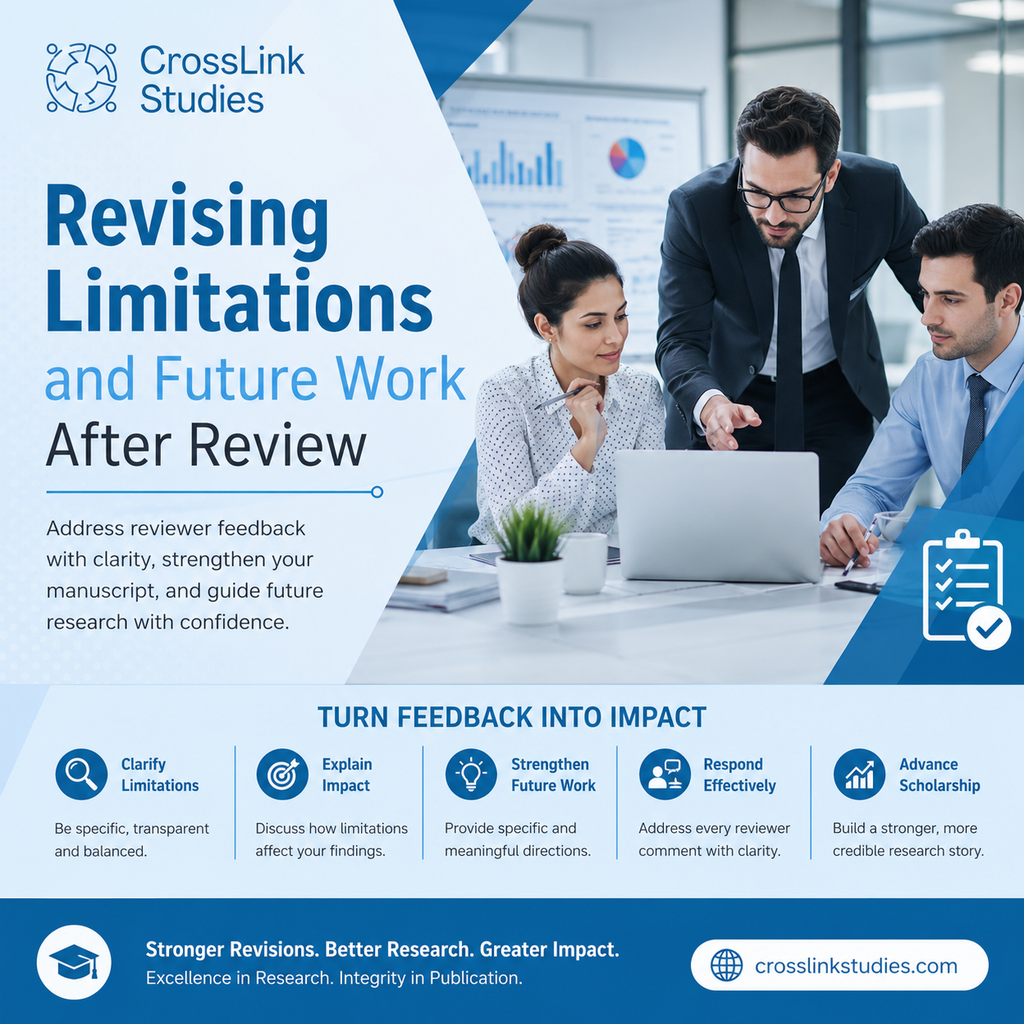
Be Specific Rather Than Generic
General statements such as “the study has some limitations” provide little value to readers. Effective revisions describe specific constraints and explain their potential effects on the findings. Specificity enhances transparency and demonstrates a comprehensive understanding of the research design.
Explain the Impact of Each Limitation
A strong limitations section goes beyond identifying weaknesses by discussing how they may influence interpretation of the results. Rather than merely listing limitations, authors should explain:
- Whether findings can be generalized beyond the study population.
- How methodological constraints may affect reliability or validity.
- Whether alternative approaches could produce different outcomes.
- How future studies might address the identified issues.
Maintain Balance
While transparency is essential, limitations should not overshadow the study’s contributions. Effective scholarly writing maintains a balanced perspective by acknowledging constraints while emphasizing the value of the findings within the study’s scope. Researchers should avoid language that either exaggerates weaknesses or presents conclusions with excessive certainty. Balanced discussion fosters credibility and professionalism.
Revising Future Research Directions After Peer Review
Move Beyond Generic Recommendations
Statements such as “future studies should include larger samples” or “additional research is needed” are common but often insufficient. Reviewers increasingly expect future work recommendations to be specific, relevant, and directly connected to the study findings. Meaningful future research directions should emerge naturally from unresolved questions, methodological limitations, or newly identified theoretical insights.
Align Future Research with Study Findings
Future work should not appear disconnected from the research presented. Instead, recommendations should build upon existing findings and identify logical next steps. Reviewers often favor future research agendas that demonstrate how current results contribute to broader theoretical development, methodological refinement, or practical application. This approach positions the study as part of an ongoing scholarly dialogue rather than a standalone investigation.
Consider Emerging Research Trends
Contemporary research environments are evolving rapidly due to advances in technology, data science, artificial intelligence, open science initiatives, and interdisciplinary collaboration. When appropriate, authors may strengthen future work sections by discussing how emerging methodologies, datasets, or technological innovations could address current limitations and expand understanding of the topic. Such perspectives demonstrate awareness of the broader research landscape and the evolving nature of scientific inquiry.
Responding Effectively to Reviewer Comments
Address Every Concern Systematically
When revising limitations and future research sections, authors should carefully respond to each reviewer comment. A detailed response letter can explain:
- What revisions were made.
- Where the changes appear in the manuscript.
- How the revisions address the reviewer’s concerns?
Support Revisions with Evidence
Where possible, authors should support revisions using methodological literature, established reporting guidelines, or relevant empirical studies. Evidence-based responses often carry greater weight than unsupported explanations. Reviewers are more likely to accept revisions when authors demonstrate that their decisions align with recognized scholarly practices.
The Relationship Between Transparency and Research Impact
Transparency is increasingly recognized as a hallmark of high-quality scholarship. Researchers, funding agencies, publishers, and readers expect clear reporting of both strengths and limitations. Studies that openly acknowledge constraints are often viewed as more credible because they allow readers to evaluate findings within an appropriate context. Furthermore, transparent discussions of future research needs contribute to cumulative scientific progress by identifying unanswered questions and encouraging further investigation.
Building a Forward-Looking Research Narrative
One of the most effective revision strategies is to view limitations and future research as interconnected elements of a broader scholarly narrative. Limitations identify current boundaries, while future work outlines pathways for overcoming those boundaries.
Together, these sections demonstrate that research is an evolving process rather than a final destination. By acknowledging what remains unknown and proposing strategies for further exploration, authors contribute to a culture of continuous scientific improvement.
Conclusion
Reviewer feedback on limitations and future research directions should be viewed as an opportunity to strengthen both the quality and credibility of a manuscript. Thoughtful revisions can improve transparency, clarify the scope of findings, and position the study within a broader research agenda.
Rather than treating limitations as weaknesses to be minimized, authors should embrace them as essential elements of responsible scholarship. Similarly, future work sections should move beyond generic recommendations to provide meaningful guidance for advancing research within the field.
By responding constructively to reviewer feedback and developing more comprehensive discussions of limitations and future research opportunities, authors can enhance the scientific value of their work and contribute more effectively to the ongoing advancement of knowledge.
In the evolving landscape of scholarly publishing, transparency, critical reflection, and forward-looking research perspectives remain fundamental characteristics of impactful and trustworthy academic research.