Why Join the CLS and UTJ Reviewer Community This Year
Peer review is the foundation of credible academic publishing. Behind every high-quality publication is a community of dedicated reviewers who ensure that research is rigorous, ethical, and impactful.
As research in AI, data science, and interdisciplinary fields continues to grow, the need for skilled and committed reviewers has never been greater. Joining the reviewer community at Crosslink Studies (CLS) and the Ubiquitous Technology Journal (UTJ) is not only a professional contribution, but also an opportunity to shape the future of research.
The Role of Reviewers in Modern Publishing
Reviewers are more than evaluators they are gatekeepers of quality and integrity, advisors to authors and editors, contributors to scientific advancement. Their insights ensure that published work meets the highest scholarly standards.
Why Join the CLS & UTJ Reviewer Community
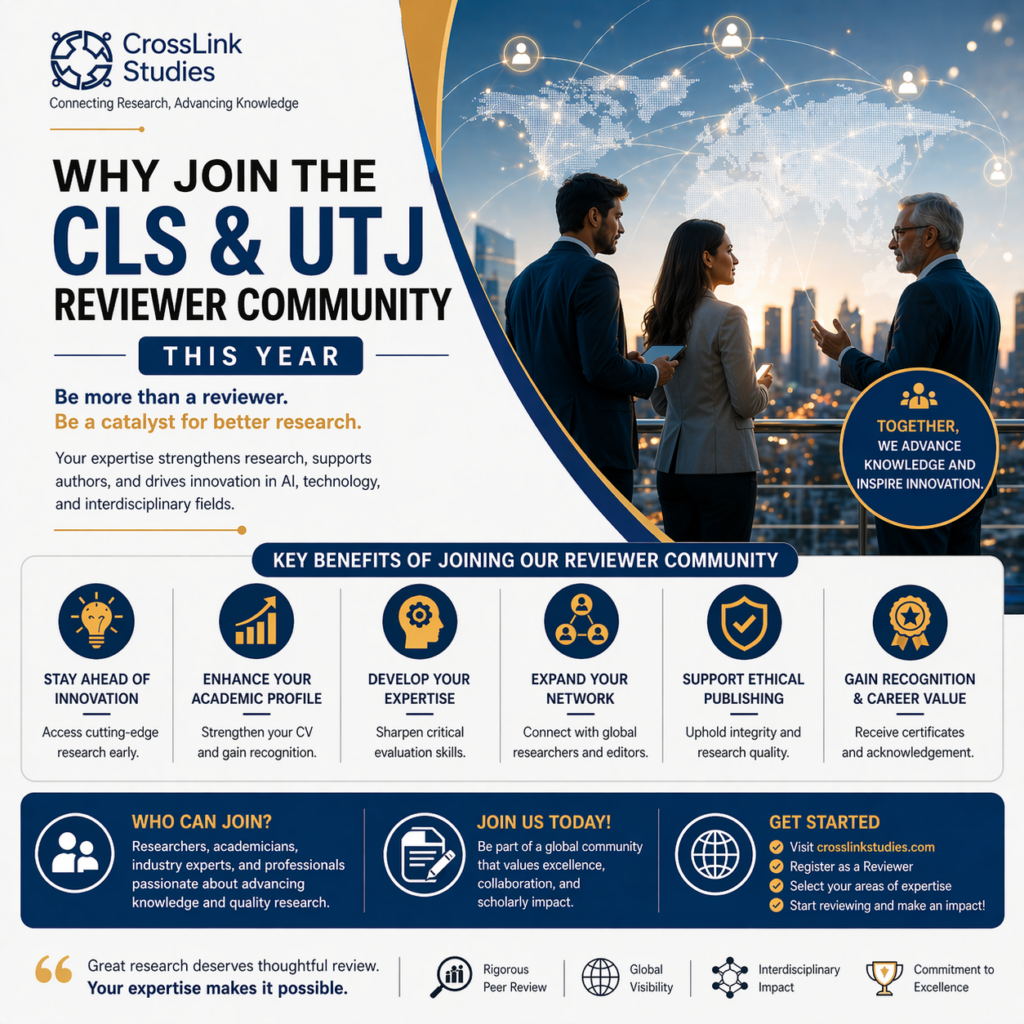
Contribute to High-Impact Research
By reviewing manuscripts, you directly influence the quality of published research, the direction of emerging fields and the credibility of scholarly communication. Your expertise helps ensure that only robust and meaningful research is disseminated.
Stay at the Forefront of Innovation
Reviewers gain early access to cutting-edge research, emerging methodologies, new technological developments. This exposure keeps you ahead in your field, particularly in fast-evolving domains like AI and interdisciplinary sciences.
Enhance Your Academic Profile
Serving as a reviewer strengthens your academic CV, professional reputation, recognition within the research community. Many journals, including UTJ, acknowledge reviewer contributions through certificates and recognition programs.
Develop Critical and Analytical Skills
Reviewing improves your ability to evaluate research rigor, identify strengths and weaknesses and communicate constructive feedback. These skills also enhance your own writing and research quality.
Expand Your Professional Network
Being part of a reviewer community connects you with editors and editorial boards, fellow researchers and experts and global academic networks. This fosters opportunities for collaboration and knowledge exchange.
Support Ethical and Transparent Publishing
Reviewers play a key role in detecting ethical issues, ensuring originality and integrity, promoting transparency in research. Your contribution strengthens trust in academic publishing.
Gain Recognition and Career Benefits
Many institutions and funding bodies value peer review as academic service, evidence of expertise, professional engagement. Recognition as a reviewer reflects your standing in the research community.
What CLS & UTJ Expect from Reviewers
To maintain high standards, reviewers are expected to provide clear, constructive, and timely feedback, maintain confidentiality and professionalism, declare conflicts of interest and focus on scientific merit and integrity. These principles ensure a fair and effective peer review process.
Who Should Join?
The UTJ reviewer community welcomes:
- Early-career researchers seeking experience
- Established academics with subject expertise
- Industry professionals contributing applied insights
Diverse perspectives strengthen the quality and relevance of reviews.
How to Get Involved
To join the reviewer community:
- Visit crosslinkstudies.com
- Register as a reviewer
- Indicate your areas of expertise
Editors match manuscripts with reviewers based on relevant knowledge and experience.
CLS & UTJ Perspective
At Crosslink Studies (CLS) and Ubiquitous Technology Journal (UTJ), reviewers are recognized as partners in advancing knowledge. We are committed to supporting reviewers with clear guidelines, recognizing their contributions and maintaining a transparent and efficient review process. Our mission is to build a strong, global reviewer community that upholds excellence in AI and interdisciplinary research.
Joining the CLS & UTJ reviewer community is more than a professional milestone, it is a meaningful contribution to the global research ecosystem. In today’s rapidly evolving research landscape, reviewers are not just participants, they are essential drivers of quality and innovation.