How to Review a Revised Paper, Not Just the Original Submission?
Reviewing a revised manuscript is fundamentally different from evaluating an original submission. At this stage, the focus shifts from identifying problems to assessing how effectively those problems have been addressed.
Leading journals emphasize that reviewers must not “start from scratch” but instead conduct a targeted, fair, and efficient reassessment. For Ubiquitous Technology Journal (UTJ), this step is critical to ensuring that revisions genuinely improve quality, clarity, and scientific rigor.
Why Reviewing Revisions Requires a Different Approach
A revised manuscript reflects an ongoing dialogue between authors, reviewers, and editors.
The reviewer’s role is to verify that previous concerns are addressed, evaluate improvements in quality and clarity, ensure no new issues have been introduced. This process supports a constructive and iterative peer review system.
Start with the Response-to-Reviewers Document
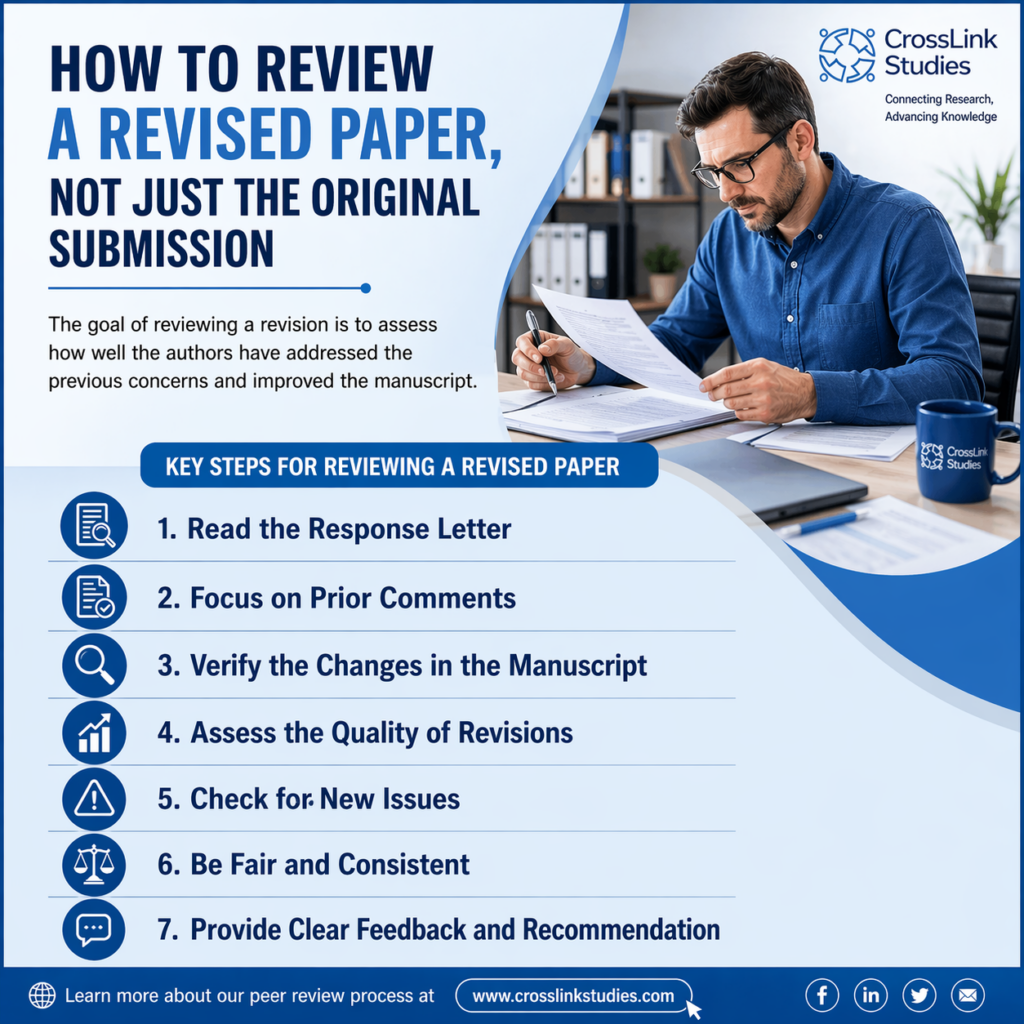
Before reading the manuscript, carefully review the authors’ response letter. Check whether each comment has been addressed clearly, changes are explained with specific references (e.g., page/line numbers), justifications are provided where changes were not made. This document serves as a roadmap for efficient evaluation.
Focus on Previously Raised Issues
Prioritize assessing whether major concerns (methodology, validity, novelty) are resolved, minor issues (clarity, formatting) are improved, avoid re-reviewing the manuscript as if it were new focus on progress and resolution.
Verify Changes in the Manuscript
Do not rely solely on the response letter. Check whether claimed revisions are actually implemented, ensure changes are accurate and complete and confirm consistency across all sections.Verification ensures that revisions are substantive, not superficial.
Evaluate the Quality of Revisions
Ask critical questions:
- Have the authors strengthened their arguments?
- Are methods now clearer and reproducible?
- Are conclusions better supported by data?
The goal is to assess whether the manuscript has meaningfully improved.
Check for New Issues Introduced
Revisions can sometimes create new problems, such as inconsistencies between sections, contradictions in updated results, overcomplicated explanations. A careful review ensures that improvements do not compromise coherence.
Be Fair and Consistent
If authors have addressed concerns adequately acknowledge the improvements, avoid raising entirely new, unrelated criticisms. Reviewers should maintain consistency and fairness in their evaluation.
Provide Clear and Focused Feedback
Your revised review should confirm which issues are resolved, highlight any remaining concerns and be concise and constructive. Avoid repeating all previous comments focus on what remains to be addressed.
Align with Editorial Expectations
Editors expect reviewers to support efficient decision-making, clearly indicate whether concerns are resolved, recommend next steps (accept, minor revision, etc.) Your report should help the editor reach a confident and informed decision.
Common Mistakes to Avoid
- Rewriting the entire review from scratch
- Ignoring the response-to-reviewers document
- Raising new major issues unrelated to prior feedback
- Overlooking whether changes were actually implemented
- Providing vague or repetitive comments
These mistakes can delay the process and reduce review quality.
At Crosslink Studies (CLS), we view the review of revised manuscripts as a collaborative and outcome-focused process. We encourage reviewers to recognize genuine improvements, focus on resolution of key issues and provide clear and balanced recommendations. This ensures that revisions lead to stronger, more reliable publications, especially in complex AI and interdisciplinary research. In peer review, the revision stage is where good research becomes excellent.