When Should a Reviewer Decline an Invitation?
Peer review is a cornerstone of scholarly publishing, ensuring that research is evaluated with rigor, integrity, and expertise. However, accepting every review invitation is neither practical nor ethical. Knowing when to decline a review request is just as important as conducting a high-quality review.
At Crosslink Studies (CLS), we emphasize responsible and ethical peer review practices. A thoughtful decision to decline, when necessary, helps maintain the quality, fairness, and efficiency of the publication process.
Lack of Subject Expertise
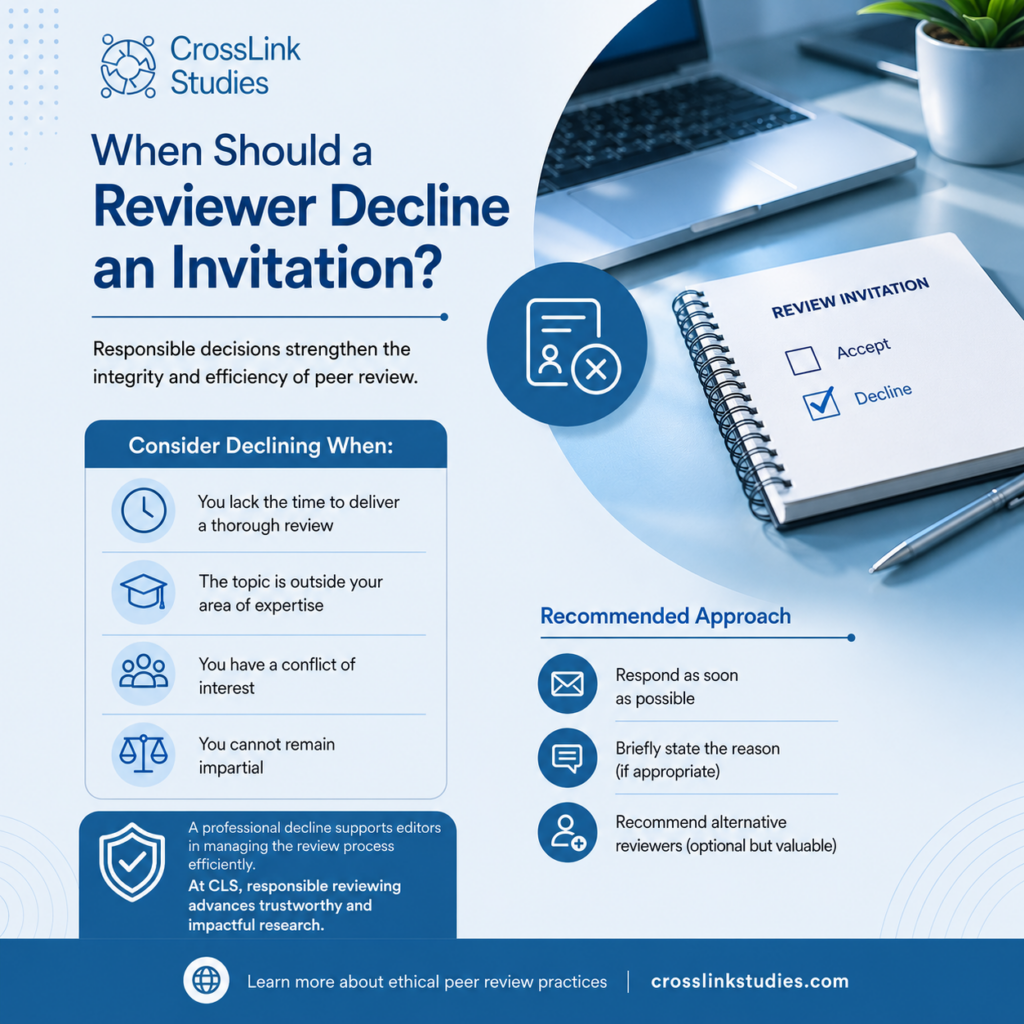
Reviewers should only accept invitations for manuscripts that align closely with their area of expertise. If the topic falls outside your knowledge domain you may not be able to provide a rigorous and informed evaluation, critical methodological or theoretical issues may be overlooked, the quality of the review process may be compromised. Decline promptly and, if possible, suggest alternative qualified reviewers.
Conflict of Interest
Maintaining objectivity and transparency is essential in peer review. A reviewer should decline if there is any potential conflict of interest, including personal or professional relationships with the authors, institutional affiliations that may bias judgment, financial or competitive interests related to the research. Even perceived conflicts can undermine trust in the review process. Ethical standards require reviewers to step aside in such cases.
Time Constraints and Workload
Timeliness is a critical component of scholarly publishing. Accepting a review without the ability to complete it on time can delay the entire editorial process. You should decline if you are unable to meet the review deadline, your current workload prevents a thorough evaluation. At CLS, we encourage reviewers to respect timelines to ensure efficient knowledge dissemination.
Ethical or Integrity Concerns
If a manuscript raises concerns that make you uncomfortable reviewing it objectively such as: suspected plagiarism or ethical misconduct, sensitive or controversial topics beyond your comfort zone. It may be appropriate to decline and notify the editor confidentially.
Repeated Requests or Reviewer Fatigue
Frequent review requests can lead to reviewer fatigue, reducing the quality and depth of evaluations. To maintain high standards, accept reviews selectively ensure you can provide constructive, detailed feedback, quality should always take precedence over quantity in peer review contributions.
Inability to Maintain Confidentiality
Confidentiality is a fundamental principle of peer review. If, for any reason, you cannot guarantee secure handling of the manuscript, protection of unpublished data.You should decline the invitation.
The CLS Approach to Responsible Reviewing
At Crosslink Studies, we uphold internationally recognized ethical guidelines to ensure that peer review remains:
- Fair – free from bias and conflicts
- Confidential – protecting authors’ intellectual contributions
- Timely – supporting efficient publication workflows
We encourage reviewers to make transparent and responsible decisions, including declining invitations when appropriate.
How to Decline Professionally
Declining a review invitation should always be done promptly and respectfully.
Suggested approach:
- Respond as soon as possible
- Briefly state the reason (if appropriate)
- Recommend alternative reviewers (optional but valuable)
A professional decline supports editors in managing the review process efficiently. At CLS, responsible reviewing is seen as a vital part of advancing trustworthy and impactful research.