How to Write a Cover Letter That Helps the Editor Immediately?
In academic publishing, the cover letter is often underestimated. Yet, for editors handling hundreds of submissions, it serves as a critical first impression. A well-crafted cover letter can quickly communicate the value, relevance, and integrity of your manuscript helping editors make faster and more informed decisions.
For journals like Ubiquitous Technology Journal, especially in AI, computing, and interdisciplinary research, an effective cover letter is not just a formality, it is a strategic tool.
Why the Cover Letter Matters
Editors use cover letters to assess the fit with the journal’s scope, identify the novelty and contribution of the research, check for ethical compliance and transparency.
A clear and concise letter helps editors decide whether to:
➡️ Send the manuscript for peer review
➡️ Request revisions
➡️ Decline at the initial stage
Key Elements of an Effective Cover Letter
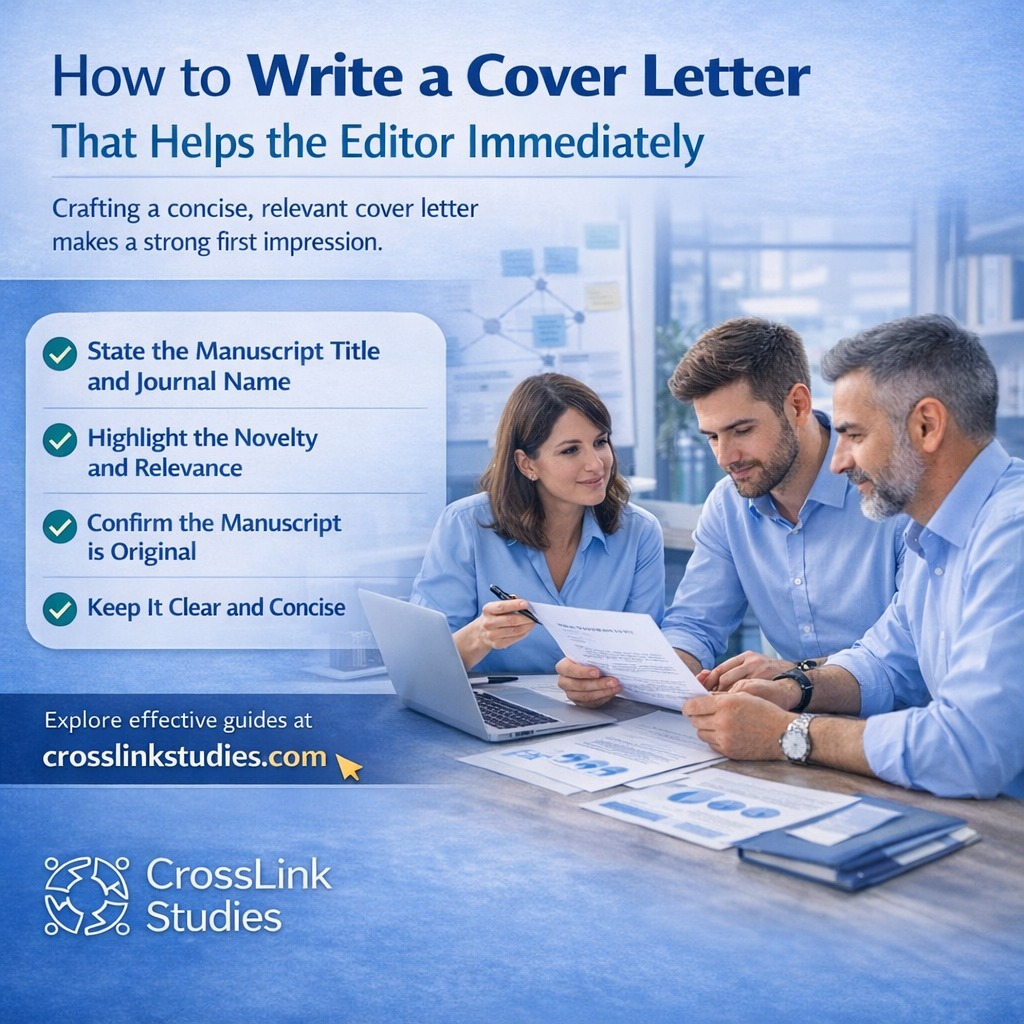
1. Start with a Clear Manuscript Introduction
Begin by stating the manuscript title type of article (e.g., research paper, review), the journal name (Crosslink Studies).
Example
We are pleased to submit our manuscript titled “…” for consideration in Crosslink Studies.
This immediately provides context and clarity.
2. Highlight the Novelty and Contribution
Editors prioritize originality. Clearly explain:
- What problem your study addresses?
- What makes your work new or different?
- Why it matters?
Avoid generic statements be precise and evidence-based.
3. Explain Relevance to the Journal
Demonstrate how your manuscript aligns with the journal’s scope, especially: AI and emerging technologies, interdisciplinary applications, data-driven or computational research. This reassures the editor that your submission is appropriate for CLS.
4. Summarize Key Findings (Briefly)
Provide 2–3 sentences summarizing main results, key implications. Focus on impact not detailed methodology.
5. Confirm Ethical and Submission Declarations
CLS require authors to confirm the manuscript is original and not under review elsewhere, all authors approve the submission, ethical standards and data policies are followed. This builds trust and ensures compliance.
6. Suggest Potential Reviewers (If required)
CLS allow or request reviewer suggestions. When included recommend qualified experts, avoid conflicts of interest, provide institutional affiliations
7. Keep It Concise and Professional
Editors prefer cover letters that are clear and direct, typically, 150–250 words, free from unnecessary detail. A concise letter respects the editor’s time.
Common Mistakes to Avoid
- Writing a generic, copy-paste letter
- Repeating the abstract verbatim
- Failing to explain novelty or relevance
- Using overly promotional or exaggerated language
- Ignoring journal-specific requirements
These mistakes can lead to desk rejection.
CLS Crosslink Studies Perspective
At Crosslink Studies (CLS), we encourage authors to use the cover letter as a clear and honest communication tool.
A strong cover letter should help editors quickly understand the manuscript, demonstrate relevance and originality, confirm ethical and professional standards. This supports an efficient and transparent editorial process. By clearly presenting your manuscript’s value, relevance, and integrity, you increase the likelihood of a smooth and successful review process.