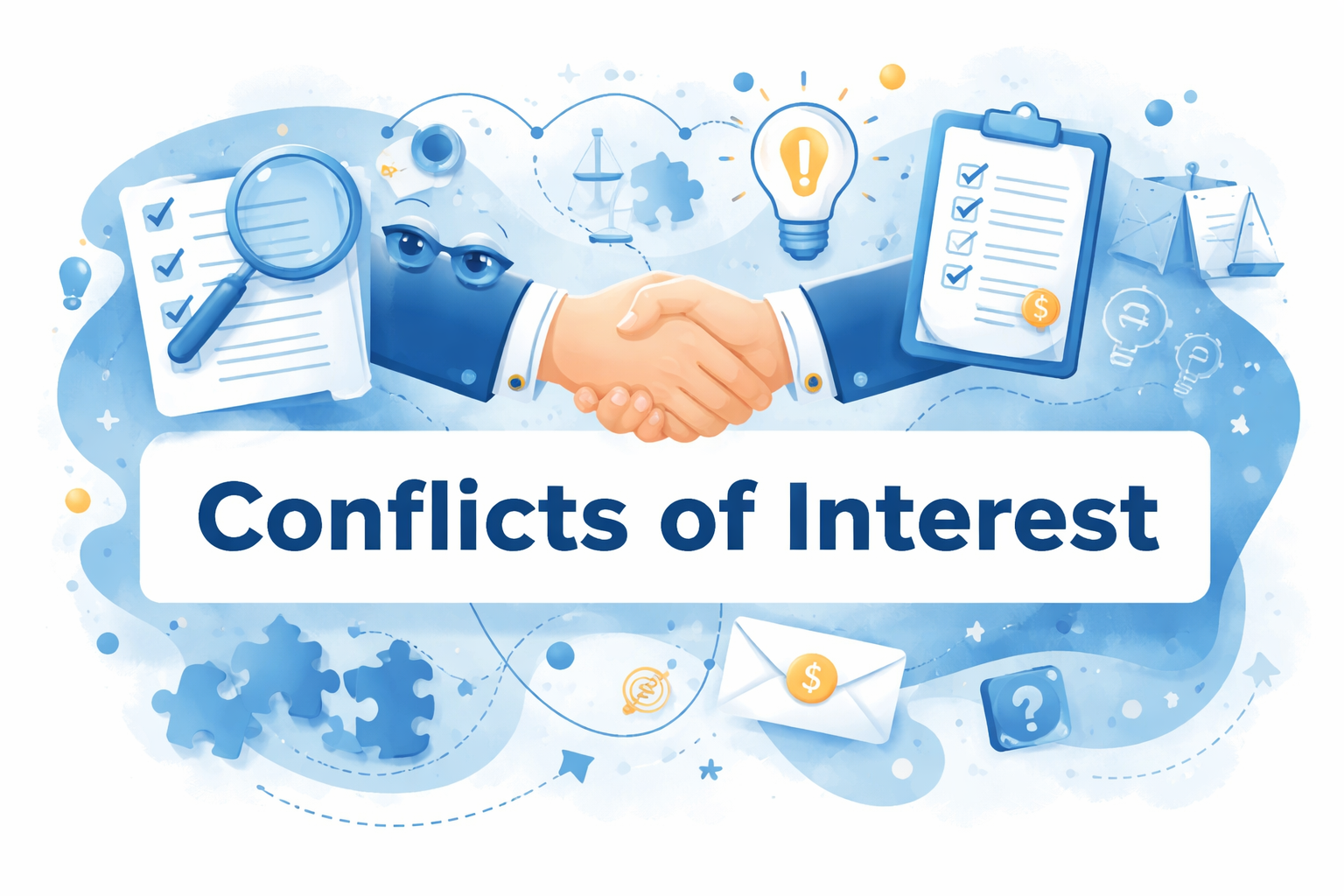
What Conflicts of Interest Look Like in Peer Review?
Peer review relies on trust, objectivity, and fairness. However, these principles can be compromised when reviewers have conflicts of interest (COIs) situations where personal, professional, or financial relationships may influence judgment.
Ubiquitous Technology Journal (UTJ), recognizing and managing conflicts of interest is essential for maintaining research integrity and editorial credibility.
What Is a Conflict of Interest in Peer Review?
A conflict of interest occurs when a reviewer’s ability to provide an impartial evaluation is affected or could reasonably be perceived as affected by external factors. Importantly, COIs are not always unethical but failing to disclose them is.
Why Conflicts of Interest Matter
Undisclosed conflicts can bias reviewer recommendations, undermine trust in the review process, lead to unfair acceptance or rejection decisions, damage the reputation of journals and researchers. Transparency ensures that peer review remains credible and unbiased.

Common Types of Conflicts of Interest
Personal Relationships
Reviewers should not evaluate manuscripts authored by close collaborators, friends or family members, former students or supervisors. Even positive relationships can lead to unintentional bias.
Academic or Professional Rivalry
Conflicts may arise when reviewers work in direct competition with the authors, have opposing research positions, stand to gain from delaying or rejecting the work. Such situations can influence objectivity.
Institutional Conflicts
Reviewers affiliated with the same institution as the authors may face loyalty bias, concerns about internal relationships. Many journals recommend avoiding reviews within the same institution.
Financial Interests
Conflicts can occur if reviewers have financial stakes in related technologies or outcomes, are involved in funded projects competing with the manuscript. Financial incentives can directly affect evaluation fairness.
Prior Involvement with the Manuscript
A reviewer should decline if they have previously reviewed the same manuscript for another journal, have contributed informally to the research, are aware of confidential details about the study. This ensures independence in evaluation.
What Conflicts of Interest Look Like in Practice?
Recognizing COIs often involves identifying situations such as:
- Being asked to review a paper written by a recent co-author
- Reviewing a study that challenges your own published work
- Evaluating research from a direct competitor in a grant proposal
- Assessing a manuscript linked to your consulting or industry role
If there is any doubt, the safest approach is to disclose and consult the editor.
How Reviewers Should Respond
o Disclose Immediately
Inform the editor as soon as a potential conflict is identified.
o Decline When Necessary
If the conflict is significant, politely decline the review invitation.
o Maintain Transparency
Even minor conflicts should be disclosed for editorial consideration.
o Follow Journal Policies
Ubiquitous Technology Journal (UTJ), provides specific COI guidelines reviewers should adhere to them strictly.
What Editors Expect
Editors rely on reviewers to act with integrity and honesty, disclose any potential bias, protect the fairness of the review process. Undisclosed conflicts may lead to removal from reviewer roles, retraction of published articles, ethical investigations.
At Crosslink Studies (CLS), we emphasize transparent, ethical, and unbiased peer review, especially in interdisciplinary and AI-related research.
We encourage reviewers to proactively identify conflicts, communicate openly with editors, prioritize integrity over convenience. Maintaining trust in peer review is a shared responsibility. By recognizing, disclosing, and appropriately handling conflicts, reviewers help ensure that research is evaluated fairly, objectively, and transparently.