
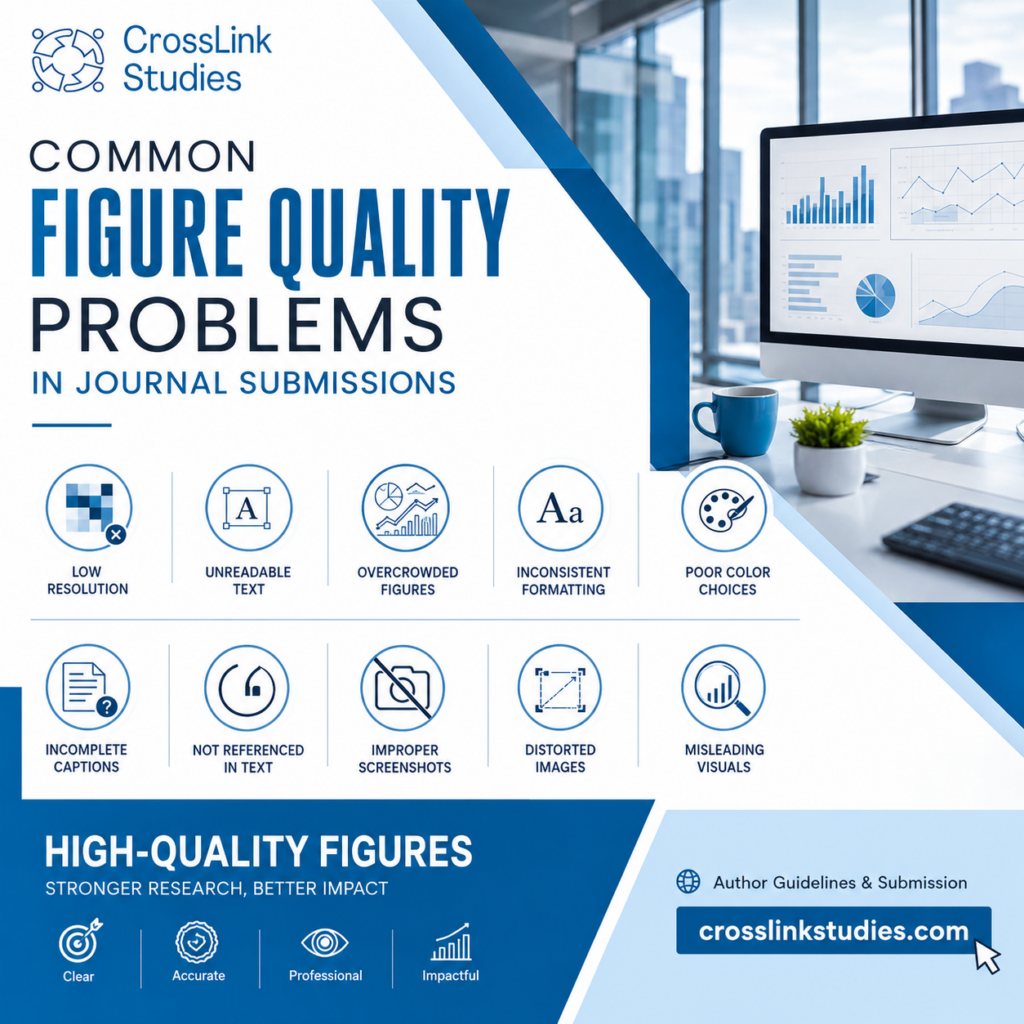
Common Figure Quality Problems in Journal Submissions
In scientific publishing, figures are more than visual supplements. They serve as essential components of scholarly communication, helping researchers present experimental findings, system architectures, workflows, performance comparisons, and analytical results in a clear and efficient manner. In fields such as ubiquitous computing, artificial intelligence, Internet of Things (IoT), cybersecurity, edge computing, and human-computer interaction, readers often rely on figures to understand complex concepts that may be difficult to communicate through text alone.
Despite their importance, figure-related issues remain one of the most common reasons manuscripts require revision before peer review or during editorial assessment. Even when the underlying research is technically sound, poor figure quality can reduce readability, create ambiguity, and negatively affect the overall professional presentation of a manuscript. As a result, authors should treat figure preparation with the same level of care as methodology, analysis, and writing.
This blog discusses the most frequent figure quality problems observed in journal submissions and provides practical recommendations for preparing publication-ready figures that meet international scholarly standards.
Low Resolution and Pixelated Images
One of the most common issues encountered during manuscript evaluation is the submission of low-resolution figures. Images copied from presentation slides, screenshots, websites, or compressed documents often appear blurred when viewed or printed at publication size.
Pixelated graphics make labels, symbols, and data points difficult to interpret. In technical disciplines, where readers may need to examine detailed diagrams or performance plots, poor image resolution can significantly reduce the value of the presented information.
Authors should ensure that all figures are generated using high-quality source files. Graphs, charts, and technical illustrations should preferably be exported directly from the original software rather than captured through screenshots. Maintaining high resolution helps preserve visual clarity throughout the review and publication process.
Unreadable Text and Small Labels
Another frequent problem is the use of excessively small fonts within figures. Authors often create diagrams on large canvases and then reduce them to fit within a manuscript page. As a result, axis labels, legends, annotations, and component descriptions become difficult to read.
Reviewers should not be required to zoom excessively to understand figure content. If labels are unreadable, the figure fails to communicate effectively regardless of the quality of the underlying data.
When preparing figures, authors should verify that all text remains legible at the expected publication size. Consistent font styles and appropriate text scaling improve readability and create a more professional appearance.
Overcrowded Figures with Excessive Information
Researchers sometimes attempt to combine too much information into a single figure. Large numbers of curves, data points, labels, arrows, colors, and annotations can overwhelm readers and obscure key findings. A figure should communicate a specific message. When multiple unrelated datasets or analyses are combined into one graphic, the central contribution may become difficult to identify.
Instead of creating highly complex visuals, authors should consider dividing content into multiple figures or organizing information into clearly separated panels. Simplicity often improves comprehension more effectively than visual density.
Inconsistent Formatting Across Figures
Consistency is an important characteristic of professional scientific publications. However, many manuscripts contain figures that appear to have been created using different software packages, resulting in inconsistent fonts, line styles, symbol sizes, and color schemes. Such inconsistencies can make a manuscript appear fragmented and reduce its overall visual quality. Readers expect a coherent presentation throughout the article.
Authors should establish a uniform design approach before creating figures. Consistent typography, labeling conventions, line thicknesses, and graphical styles help create a polished and publication-ready manuscript.
Poor Colour Selection and Accessibility Issues
Color is a powerful tool for emphasizing distinctions within data. However, inappropriate color choices can create interpretation challenges, particularly for readers with color-vision deficiencies. Common mistakes include using colors with insufficient contrast, relying solely on color to distinguish datasets, or selecting visually distracting palettes. These issues become particularly problematic when figures are printed in grayscale or viewed on different devices.
Authors should choose colors carefully and ensure that distinctions remain understandable through patterns, symbols, labels, or line styles. Effective visual accessibility broadens the reach and usability of scientific communication.
Missing or Incomplete Figure Captions
A figure should not require readers to search extensively through the manuscript to understand its purpose. Unfortunately, many submissions include captions that are overly brief or fail to explain key components of the illustration.
An effective figure caption should clearly describe what the figure presents, define important abbreviations or symbols when necessary, and guide readers toward the primary observation or conclusion that should be drawn from the figure.
According to good scholarly publishing practice, captions should be sufficiently informative to allow readers to understand the figure within the broader context of the article while avoiding unnecessary repetition of the main text.
Figures That Are Not Properly Referenced in the Text
A surprisingly common problem is the inclusion of figures that receive little or no discussion within the manuscript. Every figure should serve a clear purpose and be integrated into the narrative of the research.
Authors should explicitly reference each figure in the text and explain its significance. Rather than simply stating “Figure 3 shows the results,” researchers should interpret the findings and highlight the key message readers should observe.
Figures are intended to support scientific arguments, not merely decorate a manuscript. Proper integration strengthens the logical flow of the paper and improves reader understanding. UTJ guidelines similarly emphasize that figures should be cited within the text and that authors should explain what readers should learn from them.
Improper Use of Screenshots and Copied Images
In technology-related research, authors sometimes include screenshots from software applications, online platforms, dashboards, or third-party resources without adequate preparation or attribution.
Screenshots often contain unnecessary interface elements, low-resolution content, inconsistent sizing, or copyrighted material. These issues can reduce professionalism and potentially create ethical concerns.
Whenever possible, authors should recreate diagrams, export original visualizations, or obtain proper permissions when using previously published material. Any reused figure should be appropriately cited according to publication requirements.
Distorted Aspect Ratios and Misleading Visualizations
Figures occasionally become distorted during manuscript preparation because authors manually stretch or compress images to fit page layouts. This practice can alter the appearance of charts, diagrams, and visual comparisons.
Similarly, inappropriate axis scaling or truncated ranges may unintentionally exaggerate or minimize observed effects. Such presentation choices can affect the interpretation of results and reduce confidence in the reported findings.
Authors should preserve original proportions and ensure that visual representations accurately reflect the underlying data.
Best Practices for Publication-Ready Figures
To improve manuscript quality and reduce revision requests, authors should evaluate every figure using the following checklist:
- Ensure high-resolution image quality.
- Maintain readable font sizes and labels.
- Use consistent formatting throughout the manuscript.
- Avoid overcrowding figures with excessive information.
- Apply accessible and professional color schemes.
- Provide informative and complete figure captions.
- Cite and discuss every figure within the text.
- Verify proper attribution for reused materials.
- Preserve original proportions and data accuracy.
- Review figures at their expected publication size before submission.
High-quality figures play a critical role in communicating scientific contributions effectively. While authors often focus heavily on experimental design, methodology, and statistical analysis, figure preparation deserves equal attention. Poor visuals can obscure important findings, frustrate reviewers, and delay publication even when the research itself is strong.
For authors submitting to the Ubiquitous Technology Journal carefully prepared figures demonstrate professionalism, improve reader engagement, and strengthen the overall impact of a manuscript. By addressing common figure quality problems before submission, researchers can enhance both the clarity and credibility of their work and increase the likelihood of a successful peer-review outcome.