
A Reviewer Checklist for Originality, Validity, and Clarity
Peer review is the foundation of academic publishing, ensuring that only high-quality, reliable, and meaningful research enters the scholarly record. Reviewers act as gatekeepers of scientific integrity, evaluating manuscripts based on three core pillars: originality, validity, and clarity.
For journals like UTJ (Ubiquitous Technology Journal) a structured reviewer checklist not only improves decision-making but also ensures consistency, fairness, and transparency in the editorial process.
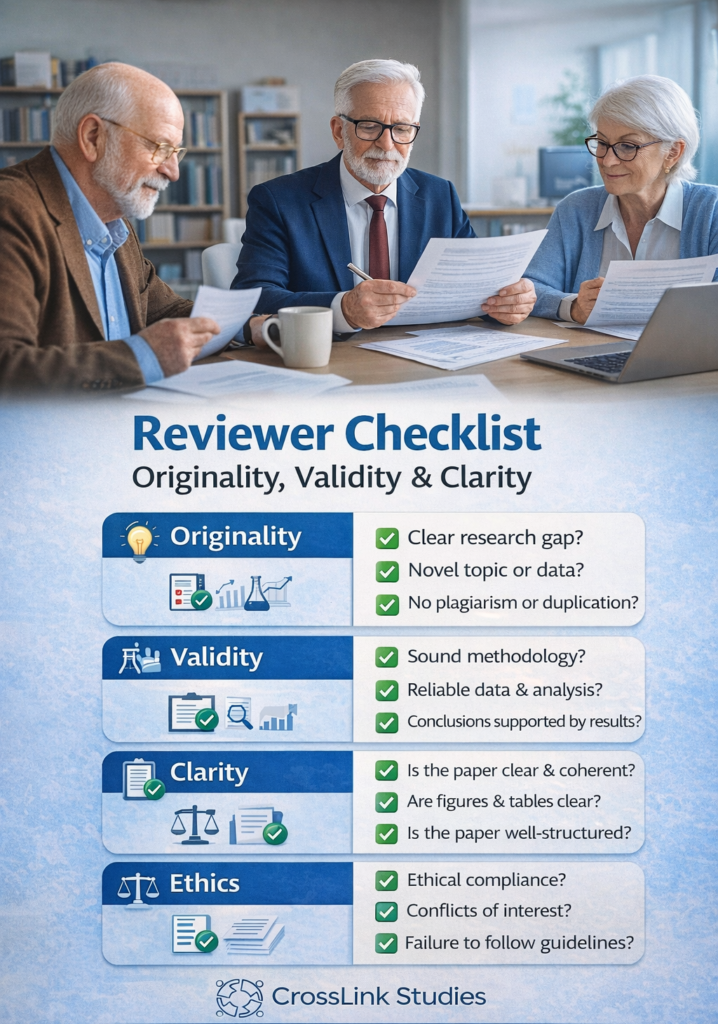
Why a Reviewer Checklist Matters
CLS emphasize the use of structured evaluation criteria to maintain research quality and integrity, ensure objective and consistent reviews, provide constructive feedback to authors, support editorial decision-making. A checklist helps reviewers avoid missing critical issues and improves the overall quality of peer review reports.
Core Evaluation Areas in Peer Review
CLS evaluate manuscripts based on originality and contribution, methodological rigor and validity, clarity and presentation. These criteria are widely recognized across peer-review system and editorial policies.
Originality Checklist (Is the Research Truly New?)
Originality determines whether the manuscript adds value to existing knowledge.
Key Questions for Reviewers:
- Does the study address a clear research gap?
- Is the research question novel and relevant?
- Does the paper contribute new insights, data, or methods?
- Are the references current and appropriately used?
- Is there any indication of plagiarism or duplication?
Reviewers often assess originality by comparing the work with existing literature and cited studies.
For UTJ standard Manuscripts must demonstrate clear contribution and innovation within technology and applied research domains.
Validity Checklist (Is the Research Scientifically Sound?)
Validity ensures that the research is methodologically rigorous and reliable.
Key Questions for Reviewers:
- Is the research design appropriate for the study objectives?
- Are data collection methods clearly explained?
- Is the sample size adequate and justified?
- Are statistical or analytical methods correctly applied?
- Do results logically support the conclusions?
- Are limitations acknowledged and discussed?
Reviewers play a critical role in verifying the accuracy, rigor, and reproducibility of research findings.
Clarity Checklist (Is the Paper Well Communicated?)
Even strong research can be rejected if it is poorly written or unclear.
Key Questions for Reviewers:
- Is the manuscript well-structured (IMRaD format)?
- Are arguments presented in a logical flow?
- Is the language clear, concise, and professional?
- Are figures, tables, and results easy to understand?
- Is the abstract aligned with the main findings?
- Does the paper communicate a clear message?
Clarity is essential because research must be accessible and understandable to readers and editors.
Ethical and Compliance Checklist
Ethical integrity is a non-negotiable requirement in scholarly publishing.
Key Questions:
- Is the work original and unpublished?
- Are ethical approvals (if required) clearly stated?
- Is there any conflict of interest disclosed?
- Are citations properly acknowledged?
Failure in ethical compliance can lead to immediate rejection during editorial screening.
Reviewer Best Practices
Beyond evaluation criteria, high-quality reviewers follow these principles:
- Provide objective and evidence-based feedback
- Maintain confidentiality
- Use a constructive and respectful tone
- Suggest practical improvements
These practices improve both manuscript quality and the overall review process. A structured reviewer checklist benefits everyone in the publication process.
✔ Editors → faster and consistent decisions
✔ Reviewers → clearer evaluation framework
✔ Authors → actionable and constructive feedback
For UTJ, maintaining high standards in originality, validity, and clarity ensures the publication of impactful and credible research.