How to Respond to Reviewer Comments with Calm and Precision
Receiving reviewer comments is a defining moment in the academic publishing journey. While feedback may sometimes feel critical or overwhelming, how authors respond determines whether a manuscript progresses toward acceptance or faces rejection.
In Ubiquitous Technology Journal (UTJ), authors are expected to respond with clarity, professionalism, and precision. A well-crafted response not only improves the manuscript but also demonstrates scholarly maturity and respect for the peer review process.
Why Calm and Precise Responses Matter
Reviewer feedback is intended to enhance the clarity, rigor, and credibility of research not to undermine it. However, emotional or vague responses can prolong the review process, create misunderstandings with editors, reduce chances of acceptance. In contrast, calm and precise responses show that authors are engaged, thoughtful, and committed to quality improvement.
Core Principles for Effective Responses
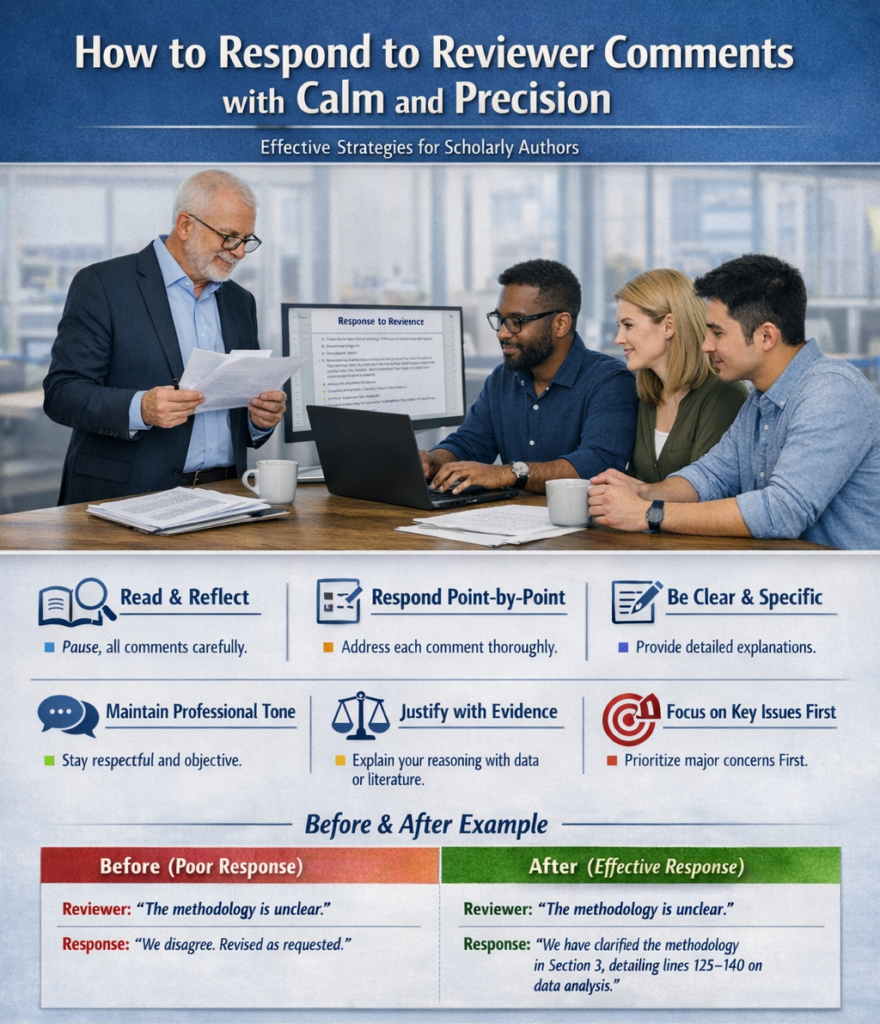
Read, Reflect, and Pause Before Responding
Initial reactions to reviewer comments especially critical ones can be emotional. Best practice is to read all comments carefully, take time before responding, avoid defensive language
Experts emphasize: never respond in frustration professional tone is essential.
Respond to Every Comment Systematically
A complete response must address every single point, even minor ones. Ignoring comments can lead to rejection. Best practice includes listing each comment verbatim, responding point-by-point, clearly indicating revisions made.
Be Specific and Transparent
Avoid vague replies such as: “We have revised accordingly”. Instead, provide precise explanations:
- What was changed
- Where it was changed
- Why the change was made
Clear, detailed responses make it easier for reviewers to evaluate revisions.
Maintain a Respectful and Professional Tone
Even when reviewers are critical or incorrect, responses should remain respectful, neutral, evidence-based
For example:
- Avoid: “The reviewer is wrong”
- Prefer: “We respectfully clarify that…”
Justify Disagreements Thoughtfully
You are not required to accept every comment. However, when disagreeing:
- Provide clear reasoning
- Support with evidence or literature
- Explain limitations or constraints
Thoughtful disagreement demonstrates academic confidence and integrity
Focus on Major Issues First
Address critical concerns (e.g., methodology, data analysis) before minor ones.
Major revisions often influence the entire manuscript structure and interpretation.
Make Your Response Easy to Follow
Reviewers and editors value clarity. A strong response document should use headings (Reviewer 1, Reviewer 2), clearly separate comments and responses, highlight revised text or sections. This improves readability and speeds up the evaluation process.
Example: Calm vs. Poor Response
| Reviewer Comment | Poor Response | Effective Response |
| “Methodology is unclear” | “We disagree” | “We have clarified the methodology in Section 3 (Lines 120–145) by adding details on data preprocessing and model parameters.” |
| “Add more references” | “Done” | “We added 5 recent studies (2022–2024) in the literature review to strengthen context (Page 4).” |
Common Mistakes to Avoid
- Responding emotionally or defensively
- Ignoring reviewer comments
- Providing vague or incomplete answers
- Failing to indicate where changes were made
- Overlooking editor’s key concerns
These mistakes can significantly reduce the likelihood of acceptance.
CLS Crosslink Studies Perspective
At Crosslink Studies (CLS), we view the revision stage as a collaborative refinement process. Authors who respond with calmness and precision improve the quality of their research, facilitate faster editorial decisions, strengthen their credibility within the academic community. In scholarly publishing, success often depends not only on the strength of your research but on how effectively you engage with feedback.