How to Keep References Current in Fast-Moving Technology Fields?
Why Current References Matter More in Technology Research
In technology-driven disciplines, knowledge evolves at an extraordinary pace. Innovations in artificial intelligence, machine learning, cybersecurity, cloud computing, Internet of Things (IoT), data science, and ubiquitous computing continuously reshape the research landscape. What was considered state-of-the-art two years ago may already be outdated today. For researchers, maintaining an up-to-date reference list is not simply a matter of academic formality, it is essential for demonstrating awareness of recent developments, identifying research gaps, and ensuring that findings remain relevant to contemporary scientific discussions.
In journals focused on technological innovation, such as the Ubiquitous Technology Journal (UTJ), current references help establish the novelty, significance, and practical value of a manuscript. A well-curated bibliography signals that the author understands both the foundational literature and the latest advancements shaping the field.
The Challenge of Rapid Technological Change
Unlike many traditional disciplines where theories evolve gradually, technology research is characterized by:
- Frequent methodological advancements.
- Continuous software and hardware innovations.
- Emerging standards and protocols.
- Rapid industry adoption cycles.
- Increasing interdisciplinary collaboration.
As a result, researchers must actively monitor developments to ensure their literature reviews and references accurately reflect the current state of knowledge. A manuscript supported primarily by outdated citations may unintentionally overlook recent breakthroughs, resulting in weaker arguments and reduced scholarly impact.
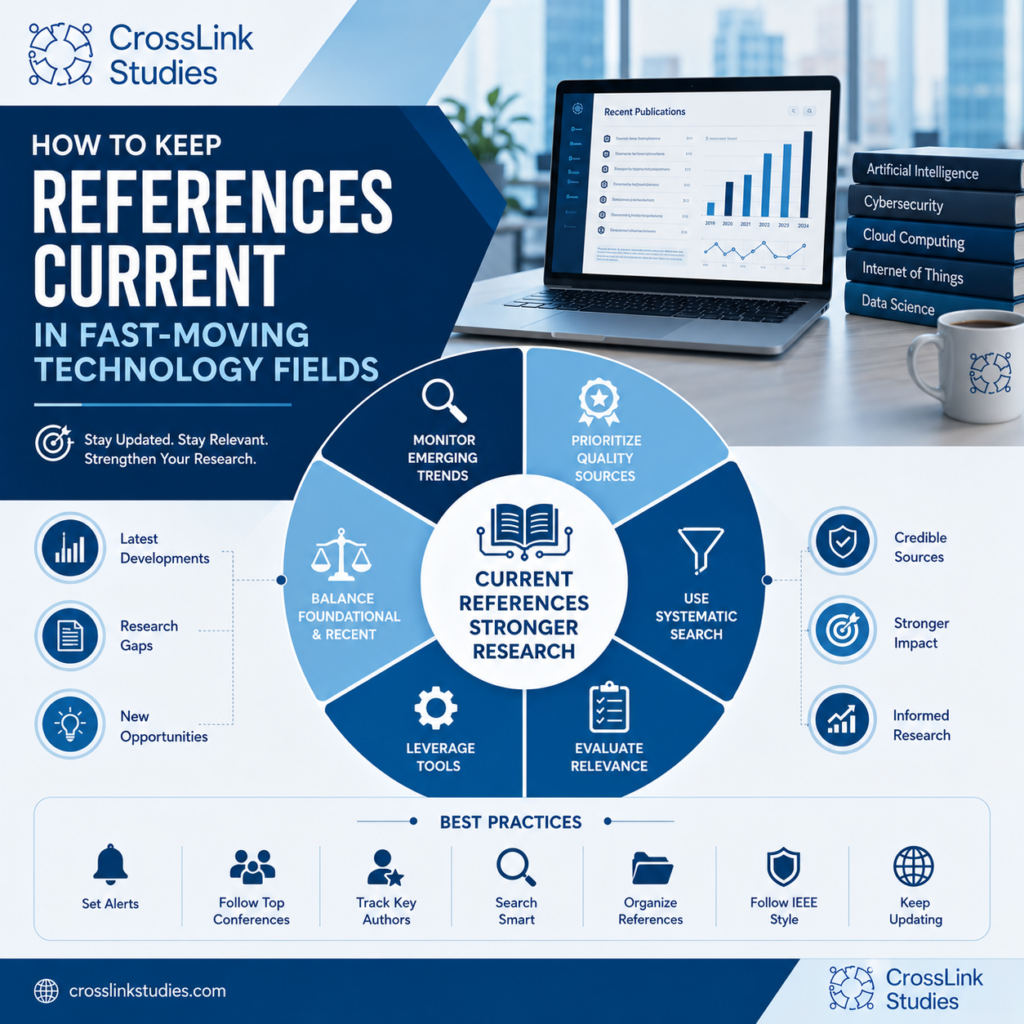
Balance Foundational and Recent Sources
Current references are important, but they should not replace foundational literature. A strong reference list typically includes:
Foundational Sources
These establish the theoretical framework and historical development of the field.
Examples include seminal algorithms, influential theoretical models, landmark technological frameworks and foundational methodological studies.
Recent Sources
These demonstrate awareness of ongoing developments and emerging trends.
Examples include:
- Recent journal articles.
- Latest conference proceedings.
- Updated technical standards.
- Contemporary systematic reviews.
- Recent industry and technology reports.
The most effective manuscripts create a bridge between foundational scholarship and current innovation.
Prioritize High-Impact Scholarly Sources
Technology researchers often have access to an overwhelming volume of information. However, not all sources carry equal scholarly value. When updating references, prioritize:
- Peer-reviewed journal articles.
- Reputable international conference proceedings.
- Publications from recognized academic publishers.
- Professional association publications.
- Official technical standards and guidelines.
Particularly valuable sources often emerge from leading publishers and organizations that maintain rigorous peer-review processes and contribute significantly to technological advancement. The emphasis should always remain on quality, relevance, and scholarly credibility rather than citation quantity.
Monitor Emerging Trends Regularly
Researchers should not wait until manuscript submission to update references. Literature monitoring should be a continuous activity throughout the research process. Effective strategies include:
1. Set Up Research Alerts
Create alerts for keywords related to your topic, emerging technologies, leading journals in your field and specific research methods.
2. Follow Major Conferences
Many groundbreaking technology studies appear first in conference proceedings before journal publication. Monitoring major conferences helps researchers identify emerging research directions, novel methodologies, industry-academia collaborations and future research opportunities.
3. Track Influential Authors
Following leading scholars can help identify significant developments before they become widely cited. Continuous monitoring ensures that literature reviews remain current throughout the research lifecycle.
Use Systematic Literature Review Techniques
Technology research often generates thousands of publications annually. Systematic search strategies help researchers identify the most relevant and recent studies efficiently.
Consider:
- Defining clear search terms.
- Using multiple scholarly databases.
- Applying publication date filters.
- Reviewing citation networks.
- Examining highly cited recent papers.
A structured approach reduces the risk of overlooking important contributions and improves the comprehensiveness of the literature review.
Evaluate Source Relevance Critically
Newer does not always mean better. Researchers should critically assess whether a publication directly relates to the research question, contributes meaningful evidence, uses sound methodology, advances existing knowledge and scholarly credibility. The objective is to maintain a reference list that is both current and academically rigorous.
Avoid Common Referencing Mistakes
Many manuscripts lose scholarly strength because of avoidable referencing issues. Common problems include:
Overreliance on Old Sources
A literature review dominated by studies older than five to ten years may not adequately reflect current technological developments.
Excessive Self-Citation
References should support the research objectively rather than artificially increase citation counts.
Using Unverified Online Sources
Technology-related information from blogs, promotional websites, or unreviewed content should be used cautiously and only when appropriate.
Ignoring Recent Breakthroughs
Failure to incorporate major recent developments can reduce the perceived novelty of the manuscript.
Addressing these issues strengthens both the credibility and impact of the research.
Leverage Reference Management Tools
Modern reference management software can help researchers maintain accurate and current bibliographies. Popular tools include Zotero, Mendeley, EndNote and RefWorks.These tools assist with organizing literature, managing citations, detecting duplicates, updating references and formatting bibliographies according to journal requirements.Using such tools improves efficiency while reducing formatting errors.
Align References with Journal Expectations
Editors and reviewers expect references to demonstrate both scholarly depth and contemporary relevance. For submissions to UTJ, authors should ensure that references:
- Support the manuscript’s objectives.
- Reflect recent developments in the field.
- Follow the journal’s formatting requirements.
- Adhere to IEEE citation style.
- Maintain consistency and accuracy throughout the manuscript.
A carefully updated reference list contributes positively to editorial assessment and peer review outcomes.
Technology research advances rapidly, and scholarly references must evolve alongside it. A current and carefully selected bibliography demonstrates that researchers are actively engaged with ongoing developments, understand the latest challenges, and contribute meaningfully to scientific progress. The strongest technology manuscripts are not simply built on innovative ideas, they are grounded in current, credible, and strategically selected literature. By continuously monitoring developments, critically evaluating sources, and maintaining a balanced reference list, researchers can enhance the quality, relevance, and impact of their scholarly work.
In today’s fast-moving technological landscape, staying current is not merely an advantage, it is an essential component of research excellence.